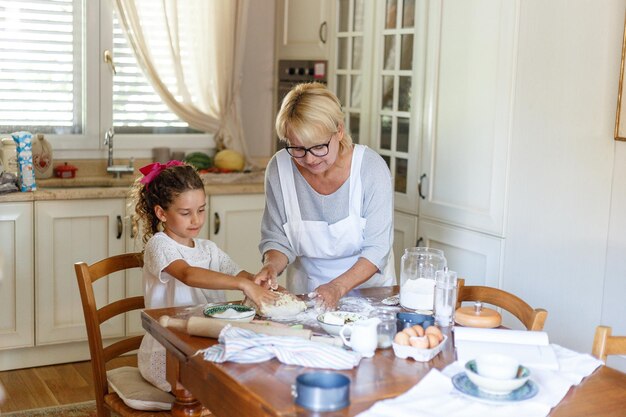
Homeschooling: A Complete Guide to How It Works, What the Research Shows, and What Families Need to Know
Homeschooling sits within the broader landscape of K-12 education as one of the most flexible — and most misunderstood — options available to families. Unlike traditional public or private schooling, where curriculum, schedule, and instruction are largely determined by outside institutions, homeschooling places the primary responsibility for a child's education with the parent or guardian. That shift in responsibility is both the defining feature and the central challenge of the approach.
This page explains what homeschooling actually involves, what the research generally shows, how the many variables within it shape outcomes, and what questions are worth exploring before drawing any conclusions about your own situation.
What Homeschooling Is — and Where It Fits in K-12
In the K-12 context, homeschooling is one of three broad educational settings — alongside public schools and private schools — recognized in most U.S. states and many countries worldwide. What distinguishes it isn't simply the location (home) but the structure of accountability: parents or guardians take on the role of educational director, and in many cases, primary instructor.
Homeschooling is not a single method. It's a legal category that encompasses dozens of different philosophies, curricula, and daily structures. A family using a boxed, structured curriculum from a Christian publisher and a family following a child-led "unschooling" approach are both legally homeschooling — even though their day-to-day experience may look almost nothing alike.
Understanding this range is essential, because it means that research findings, anecdotal reports, and general claims about homeschooling rarely apply uniformly. The word describes a setting more than it describes a method.
📋 How Homeschooling Actually Works
Legal Framework and Oversight
Homeschooling is legal in all 50 U.S. states, but the regulatory environment varies significantly. Some states require regular standardized testing, portfolio reviews, or notification to local school districts. Others impose minimal or no requirements beyond a basic notification. Families in countries outside the U.S. face an equally varied legal landscape — homeschooling is tightly regulated in some nations and effectively prohibited in others.
This variation in oversight matters because it directly shapes what homeschooling looks like in practice, what records families maintain, and what accountability structures exist.
Instructional Approaches
The instructional approach a family chooses is one of the most consequential decisions within homeschooling, and the options span a wide spectrum:
| Approach | Core Characteristic |
|---|---|
| Traditional/structured | Follows a set curriculum with textbooks, lessons, and grading similar to school |
| Classical education | Emphasizes logic, rhetoric, and great texts; organized around the trivium |
| Charlotte Mason | Focuses on living books, nature study, and short focused lessons |
| Unschooling | Child-led learning based on natural curiosity, no formal curriculum |
| Eclectic homeschooling | Draws from multiple methods depending on subject and child |
| Umbrella/hybrid schools | Combines home instruction with part-time enrollment in a co-op or school |
Most families don't begin with a fixed philosophy and maintain it unchanged — approaches often evolve as children grow and family circumstances shift.
Who Does the Teaching
In many homeschooling families, one parent is the primary instructor, though the roles vary. Some families divide subjects by each parent's strengths. Others rely heavily on online courses, tutors, co-ops, or community college dual enrollment for older students. The teaching arrangement affects both the academic experience and the practical feasibility for different families.
What the Research Generally Shows 🔬
Research on homeschooling outcomes is a genuinely complicated area. Several important caveats apply:
Selection bias is a persistent challenge. Families who homeschool are not a random cross-section of the population — they tend to differ from the general population in income, educational attainment, motivation, and time availability. This makes it difficult to isolate the effect of homeschooling itself from the characteristics of families who choose it.
Measurement inconsistency is another issue. Studies use different outcome measures, cover different age groups, and draw from different populations, making direct comparisons unreliable.
With those limits stated: research that has examined academic outcomes among homeschooled students has often found performance at or above grade-level averages on standardized measures, though researchers consistently note that these findings cannot be generalized broadly given the self-selected nature of most study samples. Studies examining socialization — a common concern — have generally not supported the assumption that homeschooled children are socially isolated, though social experience varies considerably depending on how actively families pursue outside activities and community involvement.
Research on long-term outcomes like college enrollment, career, and civic participation is still relatively limited and methodologically uneven. What exists is suggestive but not conclusive, and it's worth treating strong claims in either direction — that homeschooling consistently produces superior or inferior outcomes — with appropriate skepticism.
The Variables That Shape Outcomes
No factor in homeschooling operates in isolation. The same choice that works well for one family may not translate to another, because outcomes depend heavily on the interaction of several variables:
Parental capacity and bandwidth play a central role. Homeschooling demands significant time, organizational effort, and in many cases, subject-matter knowledge — particularly as students reach middle and high school content. Families with two working parents face different logistical realities than those with a parent available full-time.
The child's learning profile matters considerably. Children with different learning styles, attention profiles, giftedness, or learning differences may respond very differently to homeschooling depending on how it's structured. What works well for one child in a family doesn't always translate to a sibling.
Curriculum and resource access shape the quality of instruction. Families vary widely in what they can afford, what's available in their area, and how effectively they can evaluate and implement a curriculum. Access to co-ops, libraries, online courses, and extracurricular programs fills different gaps for different families.
Social environment is shaped by deliberate choices. Unlike school, social connection in homeschooling doesn't happen automatically — it requires active construction through co-ops, sports, community activities, religious organizations, or part-time programs. The degree to which families build these networks varies widely.
Grade level and subject complexity introduce new challenges over time. Many families find early elementary homeschooling relatively manageable and encounter significantly more difficulty maintaining quality instruction as content becomes more advanced.
The Spectrum of Homeschooling Families 👨👩👧
People arrive at homeschooling from many different starting points, and those starting points shape how they approach it:
Some families homeschool for religious or values-based reasons, wanting curriculum and daily instruction aligned with their beliefs. Others choose it primarily for academic reasons — dissatisfaction with local school quality, a child who is significantly ahead of or behind grade level, or a desire for a particular pedagogical approach. Medical or special needs drive some families to homeschool when their child's needs are not being met within a traditional school setting. Families with unusual schedules — due to travel, professional athletics, performing arts, or military deployment — sometimes turn to homeschooling for practical flexibility.
What motivates a family tends to shape what structure they choose, what trade-offs they're willing to accept, and what success looks like to them. A family homeschooling for religious alignment and a family homeschooling because their child has a rare medical condition are likely navigating entirely different priorities and challenges.
Key Questions Worth Exploring Further
Legal requirements and compliance vary so significantly by state and country that they warrant dedicated attention. Understanding what your jurisdiction requires — notification, testing, curriculum approval, or none of the above — is a practical first step for any family considering homeschooling.
Curriculum selection is one of the most frequently asked questions among new homeschooling families, and it's genuinely complex. What works depends on the child's learning style, the parent's teaching comfort, the family's values, and the specific subject area. Structured options, online programs, and eclectic approaches each have different demands and trade-offs.
Socialization and extracurriculars deserve careful planning, not because homeschooled children are inevitably socially isolated, but because the social infrastructure that exists automatically in school has to be built intentionally outside of it.
Transitioning into or out of homeschooling — whether from public school or to college or back into a traditional school setting — raises questions that families often underestimate. Credit documentation, transcript preparation, and readjusting to structured environments are practical concerns that vary by context.
Special education and learning differences present a distinct set of considerations. Homeschooling can offer flexibility that formal school settings sometimes struggle to provide, but it can also mean losing access to specialized services, evaluations, and legally mandated supports that public schools are required to provide under federal law. This trade-off is significant and depends heavily on the child's specific profile and needs.
High school and college preparation introduce new complexity. Course rigor, transcript standards, standardized testing, and extracurricular records all become relevant in ways that require more deliberate planning than they do in a traditional school setting.
What homeschooling looks like — and whether it serves a child well — depends on decisions made at each of these levels. The landscape is clear enough to understand. What applies within it is shaped entirely by individual circumstances.