How to Get Started With Homeschooling: A Practical Guide for Families
Homeschooling has grown from a niche alternative into a mainstream educational choice for millions of families. Whether you're pulled toward it by flexibility, values, learning differences, or dissatisfaction with local schools, the process of actually getting started can feel overwhelming. This guide walks you through what homeschooling involves, the key decisions you'll face, and what to think through before you begin.
What Homeschooling Actually Means
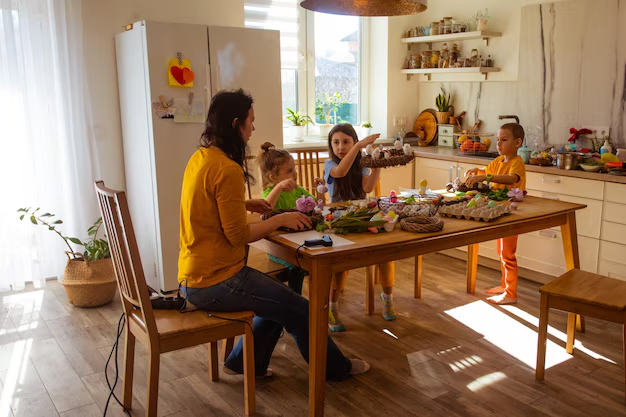
Homeschooling (also called home education) means a parent or guardian takes primary responsibility for a child's education outside of a traditional school setting. That definition covers an enormous range of approaches — from kitchen-table learning that mirrors a classroom to fully self-directed education where children follow their own curiosity.
What homeschooling is not: it's not unschooling by default, it's not illegal, and it's not the same in every state or country. The rules, requirements, and resources available to you depend heavily on where you live.
Step 1: Understand the Legal Requirements in Your State 📋
Before you buy a single curriculum or pull your child from school, you need to know your state's homeschooling laws. Requirements vary significantly across the U.S. and even more internationally.
Common legal requirements may include:
- Filing a notice of intent with your local school district or state
- Maintaining attendance or instructional hour records
- Teaching certain required subjects (core subjects like math, reading, and history are commonly specified)
- Submitting to periodic assessments or portfolio reviews
- Meeting parent qualification requirements (some states require a high school diploma; a few have no requirements at all)
Some states have very light oversight — you file a form and educate as you see fit. Others require annual evaluations, standardized testing, or regular reporting. Knowing where your state falls on that spectrum shapes everything else you do.
Where to check: Your state's department of education website is the starting point. Organizations like the Home School Legal Defense Association (HSLDA) and state-specific homeschool associations also publish updated, state-by-state breakdowns.
Step 2: Choose a Homeschooling Approach
This is often where new homeschoolers get stuck — there isn't one right method, and the options can feel endless. The major approaches differ in structure, philosophy, and day-to-day experience.
| Approach | What It Looks Like | Best Fits |
|---|---|---|
| Traditional/School-at-Home | Textbooks, set schedules, structured lessons | Families who want clear structure and measurable progress |
| Classical Education | Logic, rhetoric, Great Books; organized in three developmental stages | Families focused on critical thinking and foundational skills |
| Charlotte Mason | Living books, nature study, narration, short lessons | Families who value literature, arts, and child-led wonder |
| Unschooling | Child-directed learning through life experience | Families comfortable with high flexibility and low structure |
| Eclectic | Mix of methods chosen per subject or child | Families who want to customize based on what works |
| Online/Virtual Programs | Accredited or non-accredited online schools | Families who want structure without building it themselves |
Most families don't land on a single method permanently. Many start more structured and loosen over time — or vice versa. The right approach depends on your child's learning style, your teaching style, your schedule, and your goals.
Step 3: Select a Curriculum (or Don't)
Curriculum in homeschooling refers to the materials, lessons, and resources you use to teach. It ranges from all-in-one boxed sets to piecing together individual books, apps, co-ops, and real-world experiences.
Key factors when evaluating curriculum:
- Accreditation: Some families need accredited programs for future school re-enrollment or college admission. Others don't. Know your goal before prioritizing this.
- Religious or secular orientation: Many curricula are faith-based; many are entirely secular. This matters to different families for different reasons.
- Learning style fit: Visual learners, hands-on learners, and strong readers don't all thrive with the same materials.
- Cost: Options range from free (library resources, open-source curricula) to several hundred dollars per year for packaged programs. Cost is a real variable — but expensive doesn't automatically mean better for your child.
- Ease of use for the teacher: Some parents have teaching backgrounds; others don't. "Teacher-intensive" curricula require significant prep; "open-and-go" programs provide more guidance.
Curriculum fairs, homeschool co-op libraries, and online communities (like those on Reddit's r/homeschool or Facebook groups organized by method) let you see materials before committing.
Step 4: Build Your Schedule and Learning Environment 🗓️
One of homeschooling's biggest appeals is flexibility — but that same flexibility can become a problem without some structure.
What to think through:
- Daily schedule: Some families keep school hours similar to traditional school; others front-load lessons in the morning and leave afternoons free; others school year-round in shorter bursts.
- Learning environment: A dedicated space helps some children focus. Others work fine at the kitchen table or in different locations throughout the day.
- Your own schedule: If you work, part-time homeschooling, co-op arrangements, or asynchronous online programs may be necessary.
- Multiple children: Teaching children at different grade levels simultaneously is one of the more challenging logistics of homeschooling. Some families combine subjects; others stagger.
There's no universal right answer — what matters is that your structure actually fits your family's life, not an idealized version of it.
Step 5: Connect With the Homeschool Community
Isolation is one of the most common concerns families have about homeschooling — both for their children and for themselves.
Socialization for homeschooled children happens in many ways: co-ops where families share teaching responsibilities, community sports teams, arts programs, religious groups, and dual enrollment in local school elective courses (where permitted by state law).
For parents, the homeschool community is also a practical resource. Experienced homeschoolers can help with curriculum recommendations, legal questions, and avoiding common early mistakes.
Places to find community:
- Local homeschool co-ops (searchable through state homeschool associations)
- Library homeschool programs
- Secular or faith-based homeschool groups organized by region or method
- Online communities organized around specific curricula or approaches
What Changes When You Transition Out of Traditional School
If your child is currently enrolled in school, withdrawal is a formal process. You'll typically need to notify the school in writing and may need to collect records — transcripts, immunization records, and any special education documentation (IEPs or 504 plans).
⚠️ Special education note: If your child has an IEP or receives services through the public school, those services generally don't follow the child into homeschooling. Some districts offer limited services to homeschoolers; others don't. This is a significant factor for families of children with disabilities and worth researching in detail for your specific state and district.
Factors That Shape How Hard or Easy the Transition Is
No two families experience the same starting point. Outcomes vary based on:
- The child's age and grade level when you begin (starting younger generally involves fewer logistics)
- Whether the child has any learning differences that require adapted materials or pacing
- The parent's availability and confidence as the primary educator
- Your state's legal requirements and how much administrative work they create
- Your financial flexibility to purchase curriculum, co-op memberships, or supplemental classes
- Your child's personality — some children adapt quickly to home learning; others struggle with the change in structure or social environment
Understanding where you sit across those variables helps you set realistic expectations for the first year, which is almost universally described by experienced homeschoolers as a period of adjustment and experimentation rather than immediate mastery.
What You'd Need to Evaluate for Your Own Situation
This guide explains the landscape — but whether homeschooling is the right fit, which approach makes sense, and what curriculum will work for your child are questions only you can answer based on your family's specific circumstances. The factors above are the variables; how they weigh for your child, your household, and your goals is the assessment that belongs to you.