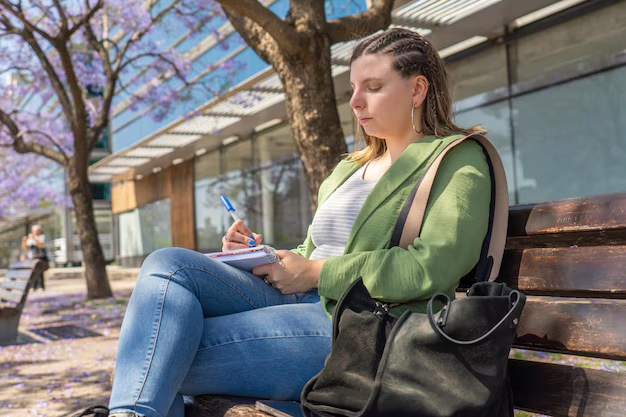
How to Deal With Homesickness in College: A Practical Guide
Homesickness is one of the most common — and least talked about — parts of starting college. Whether you're an hour from home or across the country, that ache for familiar people, places, and routines is a real psychological experience, not a sign that something is wrong with you. Understanding what's actually happening and what genuinely helps can make a significant difference in how quickly and comfortably you find your footing.
What Homesickness Actually Is (and Why It Happens)
Homesickness isn't just missing your bedroom or your dog. It's the stress response that occurs when your brain registers a loss of attachment — to people, routines, environments, and the sense of identity that comes with knowing where you belong.
College is a high-disruption transition. Nearly everything changes at once: your physical environment, your social network, your daily structure, and often your role within a family. Even students who were eager to leave home can be blindsided by how disorienting that much change feels.
A few factors that shape how intensely someone experiences homesickness:
- Distance from home — though proximity doesn't guarantee ease; some students close to home struggle more because going back feels both accessible and complicated
- First-generation student status — navigating college without family members who've done it can amplify feelings of isolation
- Previous independence experience — students who've traveled, attended summer programs, or lived away before may adjust differently than those who haven't
- Social connection at school — the speed at which someone builds even one or two meaningful connections strongly influences how quickly homesickness fades
- Temperament and attachment style — some people are wired to need more relational continuity than others, and that's not a flaw
The Difference Between Normal Adjustment and Something More 🧠
Most homesickness follows a recognizable arc: intense early on, gradually easing as new routines and relationships form. This is normal adjustment, and for many students it resolves meaningfully within the first semester.
However, homesickness that persists for months without improvement, or that interferes significantly with eating, sleeping, attending class, or basic functioning, can shade into something that warrants more support — including anxiety, depression, or adjustment disorder. These are treatable, common conditions. The distinction worth paying attention to is whether you're feeling sad but still functioning, or whether daily life has become genuinely difficult to manage.
Campus counseling centers exist specifically for this kind of support. Reaching out isn't a last resort — it's a practical resource.
Strategies That Actually Help
There's no single fix, and what works depends heavily on your personality, situation, and what's driving the homesickness. That said, certain approaches have broad support among counselors and students who've navigated this.
Build Structure Before Comfort Arrives
Homesickness often intensifies in unstructured time — weekend afternoons, evenings when the floor is quiet. Filling your calendar intentionally isn't about staying busy to avoid feelings; it's about reducing the conditions in which loneliness compounds. Joining one club, attending one recurring campus event, or establishing a gym routine creates anchoring points in your week before social bonds are strong enough to do that naturally.
Set Boundaries Around Contact With Home
This one surprises people. Calling home too frequently can slow adjustment for some students — particularly if calls tend to focus on how hard things are, which reinforces the emotional association between home and relief. This doesn't mean cutting off contact, but being intentional about it. Some students find it useful to schedule regular check-ins rather than calling reactively whenever they feel low.
For others, more frequent contact provides genuine stability without impeding adjustment. The variable is whether home contact helps you re-enter campus life or makes it harder to engage.
Lean Into the Awkwardness of Early Friendship
Early college friendships are often built on proximity and repetition rather than deep compatibility — and that's fine. Showing up consistently to the same spaces, meals, and activities is how acquaintances become friends. Students who withdraw to their rooms when things feel uncomfortable tend to extend the adjustment period; students who stay in shared spaces, even when it's awkward, tend to build connections faster.
You don't need to be outgoing. You need to be present.
Make Your Space Feel Like Yours
This sounds small, but environmental familiarity has a real effect on how grounded you feel. Photos, a familiar blanket, the mug you always used — these aren't sentimental indulgences. They're low-effort ways to reduce the constant novelty of a new environment.
Give It a Real Timeline 📅
One of the most practically useful things to understand about homesickness is that it has a timeline. The first two to four weeks are typically the hardest. Most students report meaningful improvement by mid-semester. That doesn't mean everyone does, but knowing that discomfort has a typical arc — rather than feeling like an indefinite state — changes how you sit with it.
What Tends to Make Homesickness Worse
| Pattern | Why It Can Backfire |
|---|---|
| Going home every weekend | Interrupts adjustment and delays building local connections |
| Spending most time in your room | Reduces the chance encounters that become friendships |
| Only socializing online with friends from home | Keeps your emotional investment at home rather than on campus |
| Comparing your insides to others' outsides | Most students are struggling more than they appear |
| Treating homesickness as a sign you made the wrong choice | It's usually a sign of transition, not a signal about fit |
When Going Home Is and Isn't Helpful
Going home occasionally — for holidays, family events, or a genuine mental health reset — is completely reasonable. The question worth asking is whether a visit home is helping you return to campus more grounded, or whether it's functioning as an escape that makes campus feel more foreign each time.
For students who live within driving distance, the ease of going home can be a double-edged situation. The option can be genuinely comforting, but it can also slow the process of establishing a new sense of belonging. There's no universal right answer — it depends on what the visits actually do for your adjustment.
Talking to Someone on Campus 💬
Most colleges offer counseling services, peer support programs, residential advisors, and first-year student programs specifically designed to help with transition. These resources are often underused because students assume they're only for serious crises, or because asking for help feels like an admission of failure.
Neither is true. A conversation with a counselor or even a well-trained RA can help you distinguish between typical adjustment and something that needs more attention — and can surface specific campus resources you might not know exist.
What applies to your situation depends on how you're experiencing this, what your campus offers, and what kind of support actually helps you. Those are things worth taking time to honestly assess.